

Importing electronic components for an Indian plant: duty, MOOWR and keeping the line supplied
How Indian plants import electronic components. How the duty adds up, ways to pay it later, the rules that reach parts and how to keep your line supplied.
Your line runs on parts from abroad: chips, display panels, circuit boards, motors and compressors. If a container is late, the line stops. If a duty claim is wrong, you pay the duty back with interest.
This guide is for plants that import components to manufacture electronics and appliances in India. It covers how the duty adds up, the ways to pay it later, the rules that reach parts as well as finished goods, and how to keep your line supplied without filling the factory floor with stock.
1. What Indian plants still import
More and more final assembly happens in India. Phones, TVs, air conditioners and washing machines are put together here. Most of these plants sit in a few belts: Noida and Greater Noida near Delhi, Sriperumbudur and Sri City near Chennai, and Pune. Many of the parts inside them still come from abroad: chips and other ICs, display panels, multi-layer circuit boards, compressors, motors and radio modules.
The government wants more of those parts made in India too. Its Electronics Component Manufacturing Scheme backs plants that manufacture components, and the materials behind them. Those plants take time to build. Until they do, most lines will keep importing parts, so the rest of this guide applies to almost every electronics plant.
2. How the duty on a component adds up
Customs duty on a part has three pieces.
- Basic customs duty. Each part has a rate set by its tariff line. Many parts used to manufacture electronics pay a lower rate, often nil, through an exemption notification.
- Social Welfare Surcharge. A surcharge worked out on the basic duty.
- IGST. Charged on the value of the goods plus the duties above.
Only the IGST comes back to you as input tax credit once the Bill of Entry shows up in your GST returns. The basic duty and the surcharge are a real cost. Some parts from some countries also carry anti-dumping duty, which can depend on the company that made them.
Check before you order: two parts in the same box can sit under different tariff lines and pay different duty. Look up each part's eight-digit line on the CBIC website or the ICEGATE duty calculator. The rate that counts is the one on the day the Bill of Entry is filed.
3. Lower duty for parts that go into your product
Many of those lower rates come with a condition. The parts must go into the product the notification names. The IGCR Rules set out how you prove that.
Here is how a plant uses them:
- Tell customs once. You file a one-time intimation on ICEGATE. It names your plant, the parts, the process and the notification. You get an IGCR number back.
- Give a bond. It covers the duty you save in case the parts are not used as promised.
- Quote the number on each Bill of Entry. The bond is debited as each shipment is cleared.
- Keep the records. You track what came in, what the line used and what is left. Since February 2025 you file the statement every quarter, not every month.
- Deal with leftovers. Unused or faulty parts can go back abroad. Or you can keep them and pay the duty you saved, with interest. If the notification sets no time limit, you have one year.
Most trouble starts when parts move to another unit, or get sold on, outside these rules. Customs then asks for the duty you saved, with interest and a penalty.
4. Paying duty later: MOOWR, FTWZ and export licences
You can also pay duty later, or in some cases not at all. Four routes help a plant keep cash out of duty.
| What it does | Best for | |
|---|---|---|
| MOOWR | Parts and machines enter your plant without paying duty. You pay when goods leave for the Indian market. | Plants that sell in India and export |
| FTWZ | Stock waits in the zone without duty. You pay only on what you take out for India. | Stock that waits or may go abroad again |
| Advance Authorisation | Parts for an export product come in free of duty. | Plants with export orders |
| EPCG | Machines and tools come in at zero duty. | Plants buying capital goods |
MOOWR: your plant as a bonded warehouse
Under section 65 of the Customs Act, your plant gets a licence to manufacture goods while imported parts and machines sit there duty free. There is no interest and no time limit while you use them.
- Goods sold in India pay the import duty on the imported parts inside them. You pay it when they leave the plant, at the rate on that day. A stock transfer or a sale of scrap counts too, not just a sale.
- Goods exported pay no duty on their imported parts at all. They do lose the standard drawback and some export incentives. Your GST refunds on exports still work as usual.
- IGST waits too, for now. The law already allows IGST to be charged at import on MOOWR goods. That change has not been brought into force yet, so plan for the day it is.
You keep digital records and file a monthly return with the bond officer. The licence covers one site and your own goods.
If you export: Advance Authorisation and EPCG
An Advance Authorisation lets you import the parts that go into an export product free of duty against a promise to export within a set time. EPCG does the same for machines, moulds and tools, against a larger export promise over several years. Our team applies on the DGFT portal, registers the licence at the port, tracks what you still have to export and closes the licence when you are done.
5. BIS, WPC and EPR rules for components
Most quality rules are written for finished products. A few reach the parts as well.
BIS: a short list of components
The Compulsory Registration Scheme covers a few components: lithium and nickel cells, power adaptors, standalone power supplies, LED drivers and LED modules, and external hard drives. Circuit boards, chips, display panels and motors are not on the list. Customs now checks each registration number live on the BIS portal before it releases your goods. The list changes so check each part against the current list.
Compressors for air conditioners and fridges
Hermetic compressors need the ISI mark. A 2026 order gives air conditioner and fridge manufacturers some room. Until 31 March 2027 they can import listed compressors for their own lines without the mark, up to a set share of what they imported before. They must keep monthly records and share a plan to buy more in India. Traders get no such relief.
Wi-Fi and Bluetooth modules
Any module that transmits on Wi-Fi, Bluetooth or a similar band needs Equipment Type Approval from the WPC. It is granted on a self-declaration with a test report, and customs asks for it with the Bill of Entry. If the module's manufacturer already holds approval for that model, other importers of the same model can use it.
E-waste and packaging
Under the e-waste rules, recycling targets fall on the brand that sells the finished product. A plant that uses imported parts in its own products registers as a manufacturer. A trader who resells imported parts carries the targets for them. Battery rules and plastic packaging rules reach further. The reels, trays and bags your parts arrive in count as plastic packaging.
We prepare and file BIS, WPC and EPR applications for you, and you sign where the law asks.
6. How components should be stored
Two things can ruin parts before they reach your line: static and moisture.
Many chips can be damaged by a static discharge you never feel. They stay in their shielding bags and come out only in an area set up for it.
Many parts also arrive sealed in a dry pack with a humidity card inside. Once the bag is open, the parts can only sit out for a limited time before they need baking. Monsoon humidity makes that matter more.
Reels should stand upright, not lie stacked under weight. Trays go no higher than the manufacturer allows. The labels and the seal date stay with each reel. Tell your warehouse which parts are sensitive, so sealed packs stay sealed until your line calls for them.
7. A warehouse near your plant
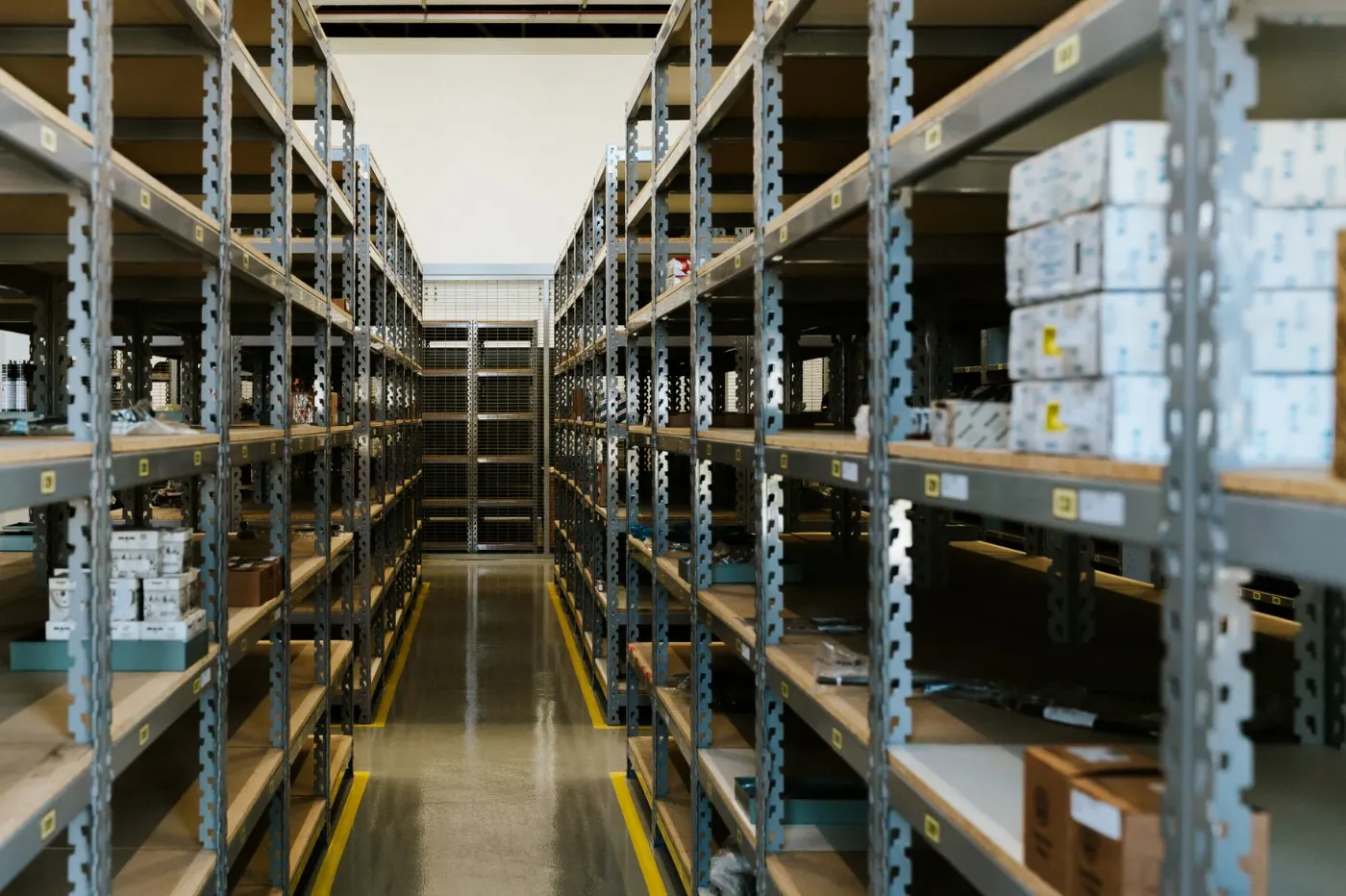
A warehouse near the plant keeps spare stock off your factory floor.
With us your suppliers deliver to our warehouse near your plant. We hold each new delivery until your quality team passes it. We store each part the way it needs. Then we send parts to your plant as production needs them so the line has what it needs without stock piling up beside it.
When something goes wrong, it comes back the same way. Parts your quality team rejects go back to the supplier. Unused stock comes back from the plant.
8. Stock your supplier still owns
Some suppliers will keep their stock close to you and bill you only when you use it. That is vendor managed inventory. It saves you cash but somebody has to keep track of whose stock is whose.
We keep that stock in our warehouse until your plant takes it. Until then it stays the supplier's. You and the supplier both see what is there on our platform so the invoice matches what your line used.
Questions plant teams ask
Do I pay duty on parts for export orders?
Not if you use an Advance Authorisation or MOOWR. With Advance Authorisation the parts come in free of duty against an export promise. Under MOOWR, goods you export pay no duty on their imported parts.
Does every electronic component need BIS?
No. Only listed components do, such as lithium cells, power adaptors, standalone power supplies and LED drivers. Circuit boards, chips and display panels do not.
Can imported parts wait in a warehouse without paying duty?
Yes, in two ways. In an FTWZ the stock waits without duty until you take it out for India. Under MOOWR it waits at your own licensed plant. An ordinary warehouse holds goods that have already paid duty.
Who carries the e-waste targets for parts?
The brand that sells the finished product. If you only use the parts in your own products, you register as a manufacturer. If you resell imported parts, the targets for them are yours.
Can you bring parts from the port straight to our plant?
Yes. Our customs team clears them at the port and our trucks bring them to your plant or to our warehouse near it.
Last updated


